05 October 2009

Book Review: Susannah, A Lawyer by Ruth Rymer


Susannah, A Lawyer: From Tragedy to Triumph
by Ruth Rymer

212 3rd Avenue North
Suite 290
Minneapolis, MN 55401
325 pages
978-1934938416$ 14.95

Rape. Sexual Harassment. Deeply ingrained, gender-based social mores. Victim blaming. The Denial of a woman’s identity. Trafficking in women (daughters) for social and economic advancement. Any one of these topics could be the subject of a lengthy body of work, but Ruth Rymer manages to draw all of the most common challenges facing women in the 19th century into Susannah’s journey from the halls of Mount Holyoke to the defendant’s chair, to a seat in one of the top firms in Chicago to read law before taking the bar exam. In Susannah, A Lawyer, Ruth Rymer manages to bring to life the complex world of intelligent women in a time where attending college was for meeting husbands, not for building careers.


One challenge of writing historical fiction is establishing the time and social climate in a period that is not in an unimaginable past in a relatable, clear manner. Conveying the differences between current social perspectives and perspectives from the past is a challenge for any historical fiction author. Add to that the need to unveil similarities between past and present social issues (sexual harassment, for example) that may seem simplified and “solved,” and you have a task that few authors are capable of negotiating effectively. At first glance, the layer upon layer of circumstantial bad luck that Susannah encounters from the first chapter to the last seems to be an almost over-saturation of political and social points. But when taken in conjunction with the period in which Susannah, A Lawyer is set, and the impact that historical fact plays on the pursuit of a law degree by a woman, her obstacles, and the strategies she employs in overcoming those obstacles, the laundry list of assaults by friends, family, and society all become representative of the struggles women of the 19th century faced collectively. In this respect, Rymer’s juggling of controversial issues (both in the 19th century and now) with historical accuracy and engaging dialogue makes the comparison between Susannah and the reader inevitable.


Don’t mistake Rymer’s accessible writing for lack of sophistication. Susannah is full of well researched detail of language, social mores, apparel, and customs of diverse groups of people. Rymer’s experience in law is immediately evident but not intimidating, and through the voice of Susannah, readers are able to encounter reading law with the same confidence she does. Rymer creates a cast of memorable and three dimensional characters that are fallible and real. Few are absolutely despicable. Few are completely lovable. Because of the range of experiences and actions of her characters, Susannah becomes more realistic, and the end of this novel leaves the reader expecting to hear the next installment over tea in the salon tomorrow rather than waiting for a sequel. Susannah becomes a character readers grow frustrated with because of her naivete in social situations that modern readers are all too familiar with, but at the same time the audience can’t help but root for her to stand up for herself, to challenge barriers and to be the path blazing woman the title promises.

17 September 2009

Temporary Hiatus & Updates

It's been far too long since I've updated here at Lyrique Tragedy Reviews. A large reason for that has to do with the complete 180 my life has taken over the course of the past year. It also has a lot to do with the fact that my library is still in storage from the move from Pittsburgh, Pa to Baltimore, MD. As it stands I'll be moving (yet again) in October to a location closer to work to cut back on the 1 1/2 to 2 hour commute I have each way (if only I had 10 more hours a day, things would be a cake walk). Ideally, once that happens I can rescue my books from storage and jump back in the reviewing saddle and hopefully add on a few new voices who would like to contribute.

That being said, I've been reviewing Comic Books and Graphic Novels over at my other site Reality 101 and there promises to be an exciting announcement regarding that coming very soon. This may lead LTR down some interesting new avenues, but until the nuts and bolts are worked out, LTR will remain a general review site that will regain activity once I can get to my books. I'll be re-posting some of those reviews here in the coming weeks. So, if you see some changes around here in terms of layout and organization (let's not forget to clean up the blog roll and links while we're at it), don't be too alarmed.

In the meantime, you should look for a post on October 5, 2009 both here and at Reality 101! I've agreed to be one of the stops on Ruth Rymer's upcoming Virtual Book Tour promoting her new novel Susannah, A Lawyer. Ruth has graciously also agreed to answer a few interview questions, which will also be posted here. While you wait, pop over to her website and read an excerpt from the book! I'm always suspicious of Historical Fiction, but I've really enjoyed reading Susannah, A Lawyer thus far, and I'm looking forward to writing the review.


As always, write well...

Dawn

21 March 2008

Book Review: Comeback Season by Cathy Day


Any time a woman writes a book about dating and relationships the market assumes it will be a trendy “how to” manual, a fluffy Chick Lit novel, or, worse yet, an insincere combination of the two genres. Most serious scholars wouldn’t look twice at books in this category. For many serious critics and readers, the thought of a book about football and the agony of traversing the dating world couldn’t possibly hold any literary value. For this reason, Cathy Day’s memoir Comeback Season: How I Learned to Play the Game of Love, is not only unable to be easily categorized, it shakes up notions of where and how about social theory and commentary can take place.

Comeback Season chronicles Cathy Day’s experience jumping back into the dating game over the course of the 2006 Indianapolis Colts season. A lover of both football and “locker room speeches,” Day uses the tenacity of Peyton Manning and the Colts as an inspiration to make a genuine effort to overcome dating obstacles in her career, a new city renowned for dating difficulty for professional women, and her own patterns of unsuccessful partner choices. She bravely reveals her foray into the online dating world, and single-handedly fights a predatory scam dating service. At times Day’s emotional admissions are all too painfully familiar to many professional women, but she manages to keep things in perspective with a sharp wit and outright laugh-out-loud humor. Day employs an imaginary female sports reporter to inject both self deprecating humor and social commentary, and it quickly becomes clear that the reporter embodies the traditional expectations that Day has to fight against throughout her dating season.

More importantly, Comeback Season is a commentary about the unexpected results of the feminist movement. It is now far more common for women to put off getting married out of high school or an undergrad program in order to pursue a career and education. This is, unquestionably, a success for the feminist movement, but it doesn’t take into consideration the disparity between developing personal relationships and professional success that so many of those independent women, such as Day, face. When young girls were told that they can be whatever they wanted, all too often their attentions turned to career aspirations woefully devoid of female role models. Logically, then, those same young girls looked to male heroes to pattern their career paths after. Decades later it is no wonder that daughters of the early feminist movement are the ones left with the task of figuring out how to navigate between domestic desires and professional aspirations without crumbling under pressure to abandon one or the other. Couple this with the high personal and professional expectations of university English departments, and Day captures the complex lives of many female academics today.


From Comeback Season: How I Learned to Play the Game of Love:


…The ivory tower is full of single professional women, but in my experience, they very rarely talk about the similarity of their situations.

I was feeling mighty down the day of the exit interview. When Hattie asked me why I was leaving the college, I paused for a second and said, “Deep, soul-crushing loneliness.”

For a second, I thought we both might start crying. Hattie looked deflated, like I’d knocked the wind out of her with those words. “I know what you mean,” she offered. But then she recovered herself. She stood up from her chair, smoothed her blue skirt, and gave me a firm, businesslike handshake. “Good luck, Cathy.” (109)


To dismiss Comeback Season as merely a dating memoir is a mistake. Too often “serious” social commentaries are expected to be dry, boring, emotionless, and full of jargon. Because Day writes with an accessible, often humorous, style and does so without masking the core issues of her journey behind opaque symbolism, the questions her experience raises will reach more women, and generate more constructive discussion about road blocks women face, but are ashamed to discuss for fear of being perceived as weak. After all, the problems that intelligent, professional women face aren’t trapped inside the ivory tower. Cathy Day brings those issues to the streets in a way anyone can understand.


Review by Dawn Papuga


06 January 2008

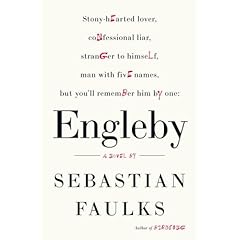
Book Review: Engleby by Sebastian Faulks


Engleby
By Sebastian Faulks

Doubleday
1745 Broadway
New York, NY 10019
http://www.doubleday.com/
342 pages

ISBN: 978-0-385-52405-6
$24.95

“I decided not to be mad any more; I was never going back to a place like that again.”
Engleby
, pg. 191


Audiences love underdogs and surprises. They also love the formulaic nature of entertainment. Readers, even if they’ve never encountered the term “archetype,” recognize signature character types when they see them. Conventional literary signposts clue readers in on who to root for, who the good guys are, and who should be wearing the black hat. In Engleby, Sebastian Faulks turns conventional character development on its ear and, like Nabokov did with Humbert Humbert in Lolita, forces the audience to invest in a protagonist who is detestable, yet addictive.

By no means is Engleby merely a case study of a sociopath. Michael Engleby’s very thought process is intellectually elitist, condescending, and uncomfortably devoid of recognizable emotion. On page 2, he gives readers cause to question his own understanding of the world’s events. Because of the journal format of Engleby the protagonist is already set up as an unreliable narrator, but his intelligence and astuteness cause audiences to question the traditional literary device. Even still, through each analysis Engleby reveals regarding society and social practices in general, a clearer understanding of his anti-social mentality is gained. Engleby hovers on the fringe of social groups and is apt to point out that he likes “to be invisible.” At one point he invites himself to the country with a group of students working on an independent film to be close to Jennifer Arkland, and while no one can remember who invited him to begin with, they’re grateful for his cooking and drug supply. Other times he relives, in painful detail, the various abuses he sustains from countless others—both university dons and his fellow students at each of the schools he attends.

Though readers may sympathize with some of Engleby’s experiences and insights, there are equally as many instances for the reader to turn on him. The sharp disconnect between his intellectual understanding of the world and social interaction, and the practice of those skills and application of that knowledge, is the single most unsettling aspect in his character. You don’t like Engleby, but you want to understand him. You’re compelled to understand him. Through the entire journal you wait for some inkling of genuine emotion, for some signal that he hasn’t fully detached from society and reality, or that he is still, in some basic way, human. Faulks engineers this pseudo-diary in such a captivating way that the readers become co-conspirators with Engleby, and even to the very end, reserve a fraction of hope for the troubled young man.

Plenty of people have experiences or demonstrated the anti-social and intellectual superiority complexes that Engleby goes through, but not every one is Engleby. Not all intellectual elitists are certifiable. Not all highly intelligent people exist solely in the landscape of their own minds. Because Engleby had never experienced the guiding hand of a true teacher (he felt, and probably was, smarter than the “dons” at his various schools, including Cambridge). He stepped into the tiger pits of philosophy and sociology with no hand to help him back out into reality. His existential crisis is not merely a phase, but becomes a disease of the mind.

Engleby could be a treatise on the mind of a single mentally ill young man, but it shines a light on issues that are far more complicated. It’s about the lack of perception of those around troubled individuals, and it can easily be a warning to society about the dangers of closing your eyes to bullying—specifically bullying based on a warped sense of tradition or “boys will be boys” attitudes. Most importantly, Engleby speaks to the dangers of knowledge and unguided intelligence, and the dangerous line in the sand between intelligence and insanity.

The last third of the book shifts perspective from the Engleby readers know, to a medicated, institutionalized Engleby who can identify his behavioral problems of the past and the crimes he committed, but still cannot feel appropriate emotional responses. The difference is that he wants to. While others may criticize this turn in the novel, it is absolutely necessary to complete the story. To leave the journal incomplete, or to shift to third person would render the tragedy in Engleby trite and meaningless. Without his shift from book knowledge to personal knowledge, his experiences and writings would be rendered pointless because even after he is given the tools to help himself, Engleby chooses to remain locked in the safety of his own mind where he can rearrange reality and history, and that itself is his tragedy.

Faulks departed from his comfortable writing styles with Engleby, and readers may or may not be appreciative of the sudden shift in gears. He moves from his comfort zone of historical fiction to a fiction riddled with history and both mental and social illness in such a way that reading the novel once would cheat readers out of the carefully woven clues and allusions Faulks works into his writing that are only able to be appreciated after the final revelations of the protagonist. Engleby may be a departure from Faulk’s other writings, but it is a path well following him down.


Review by Dawn Papuga

14 November 2007

Book Review: Evacuation Plan by Joe M. O'Connell

Evacuation Plan: A novel from the Hospice
By Joe M. O’Connell

Dalton Publishing
182 pages
ISBN: 978-0-9740703-8-4

Death isn’t usually the focus of contemporary novels. It’s dark, it’s uncomfortable, and it doesn’t typically inspire the warm and fuzzy feeling that mass market readers seem to require for beach reading selections. Death forces readers to confront their own shortcomings, failures, and emotions. But while death may be a topic most authors avoid directly, it plays a major role in most story lines. There are no murder mysteries without death. Some of the most beloved romances include characters forced to endure the world once the love of their life passes on. Epic journeys are often instigated by the death of a revered individual. What, then, frightens authors and audiences so much about dealing with death directly?

Joe M. O’Connell tackles the culture of death in his debut novel Evacuation Plan: A Novel from the Hospice. Matt, a wayward filmmaker determined to find the fodder for his screenplay, spends time with the patients, staff and family members of a local hospice and gets more than he bargained for. Through each character’s revelations, Matt inches his way closer to the issue that drove him to write the screenplay in the first place—his unresolved issues with his father’s death, and his abandonment by his mother. Ultimately, Matt realizes that the examination of death requires the examination of life as well. With the passing of his favorite patient, Mr. Wright, Matt comes to understand that forgiveness is as life changing as any cure.

O’Connell’s approach to story telling is reminiscent of Chaucer’s Canterbury Tales, or Boccaccio’s Decameron. While Matt plays the host, the stories that each individual shares provide snapshots of different cultures and socioeconomic classes, and illustrates how death effects everyone regardless of wealth, gender, education, or age. In an age where voyeuristic appetites are catered to with Reality TV, O’Connell shares a glimpse of how tragedy effects everyone, and how dealing with death is as important for the grieving as it is for the dying.

Each vignette has a unique flavor and is written in that specific character’s voice, leaving no question that each story is distinctly one character’s experience. Matt’s own journey throughout the book, however, creeps through the supporting narrative until the inklings that astute readers develop in chapter one about Matt’s true motivations come to fruition. The most impressive accomplishment of Evacuation Plan is that the structure of the novel and O’Connell’s vivid imagery encourage readers to visualize the entire narrative as a film even as Matt is scrounging to develop his own screen play.

Review by Dawn Papuga

18 October 2007

Reading and Review Updates

As you all know, I have quite a reading list going at the moment, and I’m enjoying everything that has been sent my way for review. Because I'm reading, I haven't been able to post as often as I would like here on LTR. Between reviews, I've taken to posting related commentaries and I intend to do more of that in the coming weeks. I’ve returned to my process of reading multiple books at once for a few reasons, really. I gave single book reading the old college try, but it’s just not my style. Once I abandoned the uncharacteristic practice, things have returned to highly enjoyable, productive levels. Here’s an update on where my list currently stands, and what you can expect in the way of reviews soon:

Books finished and in the review process:

Engleby by Sebastian Faulks
Evauation Plan by Joe M. O’Connell

Currently Reading:
Rodney by Dick Baldwin
Shadow of Innocence by Ric Wasley
Women of Magdalene by Rosemary-Poole Carter
Juliette Ascending by Rosemary-Poole Carter
Resonance by Chris Dolley


Interviews:
Interviews for authors whose books I've finished reviewing will be sent out this weekend. Plans for live call-in interviews are still in the works. Once the program is finalized and the Talkshoe show is set up, invites will be sent to authors expressing interest in being interviewed on the show as well as via email. Live show interviews will not be required.


Special Projects (Currently reading):
The Seige of Zolodex and Quest for the Shard by Clifford B. Bowyer

The Bowyer Project, as I've dubbed it, will be a look at all of the books in both author Clifford B. Bowyer's Young Adult and Adult fantasy series, and will be more in depth than a regular review because of the length of the project. I'll post occasional updates as the project continues to move along.

In terms of exhibit and event reviews, I will be posting a review of the poetry reading that took place at PPU last night, featuring Lynn Emanuel. When I get a free day I'll be attending the Body Exhibit at the Carnegie Science Center and posting a review as well.

In the meanwhile, if you have any issues or topics you'd like to see discussed, or books reviewed here on LTR, send an email my way, and I'll see what I can do! As always, thank you for the feedback!

Write Well,
Dawn Papuga

09 September 2007

Book Review: Unscarred by R.M. Hamilton


Unscarred
By R.M. Hamilton

Aventine Press
1023 4th Ave #204
San Diego, CA 92101
http://www.aventinepress.com/
239 pages
ISBN: 1-59330-401-3
$15.50 Paperback

Following the brutal overthrow of King Jonathan, the Land of Eir is thrust under the thumb of Maurader and the army of the Eternal Flame. Unscarred really begins when Kyle is forced by Maurader to accomplish a task that only he can undertake. Throughout the journey, young Kyle learns far more than he bargained for and is forced into manhood through torture, conflict, revelations of his heritage, his desire to become whole again, and his growing need to rescue his homeland from the megalomaniacal Maurader. R. M. Hamilton gives readers a coming of age story of magic, conflict, and triumph.

This first novel is a valiant effort to pull together all of the tropes of the fantasy genre, but falls short in a number of areas. The narrative is told in the offsetting and untraditional first person present tense—a distraction that often makes the story itself inaccessible. While the core of the plot is unquestionably Hamilton’s, the ancillary characters, plotlines, and set ups are instantly recognizable for any seasoned fantasy reader as archetypal and predictable.

Navigating the world of self publishing can be difficult and fraught with issues that traditional brick and mortar publishing corrects, particularly when dealing with fantasy. Unscarred would have benefited from a good editor and copyeditor. In the more engaging portions of the story, typos and grammatical issues pull readers out of the story and onto the physical page to figure out corrections. In places the dialogue is frustratingly modern and conflicts with the setting and genre, while other places take the dialogue too far into the melodramatic excess that fantasy can easily become. In the end, Unscarred reads like a tabletop game transcribed—an excellent concept that requires more fine tuning.

Unscarred does, however, illustrate the imagination, dedication and understanding of the genre that R.M. Hamilton possesses. Based on the tone of Unscarred, I would be surprised if Hamilton doesn’t eventually find a successful following in the Young Adult section with his future works. With his first novel completed, I look forward to seeing where his writing turns from here.

Review by Dawn Papuga

05 July 2007

The World is Not Flat

As the title of this post suggests, the world is, indeed, not flat. Because it is round, there is no true direct line between points A and B, and any travel between A and B will result in some round about way of getting there--even if it looks like a direct, as the crow flies, shot. And it is because of this non-flat point that I am still in the process of moving into an apartment that is no more than seven blocks from my current residence. You'd imagine it would be an easy process. A done deal, even. Not so. Not in my world.

In my enthusiasm to move into this new apartment, I agreed to do the painting and minor repairs myself. I'm by no means complaining here. I truly enjoy every glob of Spackle that I have slathered onto my walls, and every drip of paint that found its way onto my clothes rather than the walls. But there were quite a bit more cracks than I had originally thought, and the painting became somewhat tedious, as it does with all perfectionists. So in a perfect world, I should be back to normal, in my new apartment, in my new office in my new apartment, by the weekend. That's if the universe allows it.

I haven't forgotten about LTR--not by a long shot! And I thank you all for your patience during this move. Here's what's on tap for the upcoming reviews:

  • Unscarred by R.M. Hamilton
  • Both of Clifford B. Bowyer's series (Fantasy, and young adult)
  • Resonance by Chris Dolley

Again, my sincere thanks to the above mentioned authors who have been beyond patient with me and my reviews. Also, I'll be accepting new books to review once I'm settled and able to function normally. This move has taken far longer than I would have liked, but it's given me some valuable insight on both the correct and incorrect way to move things. Perhaps there's a book in there somewhere.

Write Well,

~Dawn M. Papuga

30 April 2007

Book Review: Cinco de Mayo: What is Everybody Celebrating?


Cinco de Mayo: What is Everybody Celebrating?
by Donald W. Miles
iUniverse
2021 Pine Lake Road
Suite100
Lincoln, NE 68512
278 pages
0-595-39241-5
$ 20.95

Responsible parenting or teaching would send an inquisitive child to “look it up,” whatever “it” may be—a word, a fact, or an historical event. But what happens when there are no credible, adult focused resources to research from? Donald W. Miles found this to be the case when he went searching for a book to recount the historical events of the popular holiday, Cinco de Mayo. Children’s books about the holiday were plentiful, but none were available for adults with accurate, historical, in depth information. In this world of constant documentation, it is hard to believe that some topics have gone un-discussed, and that false information continues to be taught regarding a largely celebrated holiday. With this in mind, Miles made it his mission to compile the disparate resources his research uncovered into one document—Cinco de Mayo: What is Everyone Celebrating?

Miles’ book is a step by step historical progression through the seven-year struggle for Mexicans to reclaim their country from the grip of Napoleon III that began with the battle of Puebla in 19th century Mexico. He painstakingly sets the scene for every move the European armies made on their progress to take Mexico City and install Archduke Maximilian as Emperor of Mexico. Not only does Miles give readers an intimate view of the military rationale for every advancement from Veracruz to Puebla to Mexico City and the eventual execution of Archduke Maximilian, he incorporates the perspectives of the Mexican people and how the American Civil War effected the movement of both French and Mexican armies. Miles provides a panoramic perspective on events that have been glossed over in the past, and drives home the impact of the battle of Puebla for any individual seeking an understanding of celebration of Cinco de Mayo. Though at times Cinco de Mayo can appear to be flirting with historical fiction, Miles demonstrates his thorough research in every segment of the book, and offers a complete bibliography to support his presentation of a segment of time in Mexican history.

Cinco de Mayo is a comfortable journey through the past, and does not bludgeon readers with footnotes or with dry accounts of military staging. Instead the snapshot structure of the book allows readers to easily follow the progression of events leading to the battle, and the motivations of all parties involved. Cinco de Mayo is as much about the creation of Mexican culture as it is an historical account of a battle against occupation and imperialization led by Napoleon III. Rather than recounting the events with the stereotyped sterility of history books, Miles brings to life the major actors in the theatre of war in a highly readable, accessible rendering of events and personalities.

~Review by Dawn M. Papuga


**Review completed for BookPleasures.com**

18 April 2007

Book Review: The Rose of York: Fall from Grace by Sandra Worth


The Rose of York: Fall from Grace
By Sandra Worth
End Table Books
Release date: May 9, 2007
$ 16.95 ISBN: 9780975126493


“Now is the winter of our discontent
Made glorious summer by this sun of York.”
Richard III, I.1.1-2

For all the disservice done to Richard III by Shakespeare, his opening lines of Richard III could do no more to accurately divine the shift in thought that Sandra Worth’s trilogy seeks to influence about the last Plantagenet king of England. In “The Rose of York” trilogy (Love and War, Crown of Destiny and Fall from Grace), Worth joins the likes of Shakespeare, Sir Thomas More, Horace Walpole, Alison Weir, and Beth Marie Kosir in her contribution to the commentary about the most reviled king of the English monarchy. Unlike most of her colleagues from the Early Modern period, however, Worth is not writing to appease a crown; she has no sedition laws poised to censor her text; she isn’t a mouthpiece of Tudor propaganda. Instead, Worth’s historical fiction sets out to correct centuries of rumor, political attacks, and exaggerations that have molded the image of Richard III into a villainous, “bunch-backed toad.”

In The Rose of York: Fall from Grace, Richard III is deeply in love with a woman, with the law, and with his quest to embody the ideals of King Arthur. Rather than displaying the Machiavellian suspicion that Shakespeare’s villain thrives on, Worth’s Richard III is too trusting and makes decisions based on the hope that the inherent good in his courtiers will outweigh their greed and opportunism. Unfortunately, the malicious scheming and plotting of individuals like Buckingham and Lady Beaufort consistently undermine the progress and general good that Richard III’s new laws promote. Far from the traditional depiction of Richard III as a murderous opportunist, Worth’s characterization of Richard highlights the villainy and cut throat tactics of those who would become the central core of the Tudor court.

In Rose of York: Fall from Grace, Richard is a handsome, athletic man who risks his own health to comfort his dying queen. He is a man touched by beauty and tragedy. He is a man who did not covet the title of King, but bore it with a raised awareness of responsibility and desire to change the world. Many historical fictions fall off the razor’s edge and either inundate the reader with facts and dates, or dismiss historical accuracy altogether. Worth’s Fall from Grace treads that ground carefully by giving Richard a voice that is idealistic and genuine—if not a little naive. Captivating description and real, recognizable dialogue act as a vehicle for not only historical accuracy, but a heartbreaking romance. Though readers will undoubtedly know the outcome of the story before they open the cover, Worth’s skill as a storyteller heightens audience investment in the personal lives of these historical figures and makes their tragic ends more than just an historical laundry list of dates and names. The complex relationships of the medieval court of England become easily navigable through Worth’s vibrant characterizations.

Attempting to overturn history is no small task. The complexities of court interactions and allegiances have always been convoluted, and the interpretations of those interactions have most often been told by those who had the most power. Thanks to Shakespeare, Richard III’s legacy has been one of deformity, conniving, regicide, cruelty, megalomania, usurpation, and murder. When such a negative portrait has been painted (indeed, even physical portraits were altered to reflect propaganda spread by the Tudors to alter the legacy of Richard) and maintained for generations, persuading an audience to consider facts more closely can be a monumental undertaking. Luckily, Worth’s intensive research brings together historical documentation and private correspondences to piece together the facts about Richard III’s rise to power and his short reign. Most of these facts have been available to the public, but to get an audience with a set view to revisit those same facts for reconsideration is a decisive task. Not surprisingly, Worth tackles the public opinion and wrestles it into experiencing familiar facts from a new, creative point of view.

Through the parsing together of timelines, records, and documents that have survived over 500 years of threat and suppression, Worth manages to paint a picture of Richard III that stands in direct conflict with what most people are familiar. The text is far from a didactic gloss of historical dates, names and locations, but it manages to recreate the life of Richard III with such vivacity and personality that it will forever change the mental image of one of history’s most hated monarchs.


~Review by Dawn M. Papuga

**Review completed for BookPleasures.com**


17 February 2007

Book Review: Because She Can by Bridie Clark

Because She Can
By Bridie Clark
Warner Books
Hachette Book Group
274 pages
$23.00 Hardcover ISBN: 978-0-446-57924-7

What would you endure to have everything you’ve ever dreamed of? In her first novel, Because She Can, Bridie Clark tackles the classic “overcoming adversity and cruel boss” trope, only she does it with tasteful flair and laugh-out-loud humor. Claire Truman’s job is in jeopardy, her latest love interest turned out to be as much of a loser as the rest, and her best friend wants to drag her to a high society function when she’d rather sit on her couch and indulge in the deliciously cliché week-long obligatory break-up mope. After playing the socialite at the opening of an art gallery, Claire’s life changes almost over night: she starts dating the very eligible bachelor Randall Cox (her college crush and previously dubbed “Pabst Blue Ribbon” by the friends) who sweeps her into the upper crust, and she takes a job with the a big name publishing house as an editor for the infamous Vivian Grant, rumored to be the most dangerous woman in publishing. After warnings from her mentor, family, friends, and colleagues, Claire weighs the potential benefits of doing her time at Grant Books and decides that career advancement in the competitive world of publishing is worth whatever Grant can throw at her. In the mean time, Claire’s romance with Randall Cox moves on fast forward toward happily ever after—or so everyone thinks.

Because She Can certainly sets itself apart among the recently repopularized “boss is evil” genre, but this novel is not about glorifying the cruelty of an employer so much as it is about the strength, intelligence, and internal resilience of a woman able to capitalize on any opportunity presented to her—no matter how overwhelming. Whatever you do, don’t let “Villainous Boss Malaise” keep you from this novel; if you do, you’ll miss the differences that make this novel stand out so successfully—in fact, you’ll miss the entire point. The heroine, Claire Truman, is not a naive greenhorn suddenly thrust into the scary world of executive business with a boss who Torquemada would applaud—she’s an smart professional who accepts a job with a rumored tyrant with open eyes, and knowingly prepares herself for exactly twelve months of exhaustion, late hours, and psychological abuse all with the knowledge that regardless of the questionable stability of her boss, her term with Grant Books will further her career in ways that a lateral move in the field never could. Vivian Grant and her eccentrically cruel behavior are catalysts for story progression, true, but Claire’s careful navigation through her balancing act between advancing in a career and thriving relationship is what makes this story and these characters so addictive. Claire dives in and learns everything she possibly can—good and bad—from Vivian Grant and her colleagues at Grant Books, while other heroines in this genre spend the length of a novel overcoming self esteem issues in regards to their career, body image, and personal worth. Clark’s heroine recognizes her own potential before she accepts the position and even squares off with her future boss over her initial contract offer (much higher than Grant actually expected to pay out). Because She Can isn’t a how-to guide on how to weather abuse for the good of your career—it’s a treatise on knowing when enough is enough, in both the career and social worlds, and acting on it.

Bridie Clark gives us a novel that is as much about deftly handling potentially explosive female working relationships as it is about translating those skills in a personal setting. Not only refreshing in its approach, Because She Can is genuinely funny and inspirational. Clark’s Characters are memorable and carefully written to project their distinct personalities, and yet are so recognizable that it becomes difficult for readers not to see their own coworkers and friends in these roles. Each character—even odious Vivian Grant—is accessible. Because She Can manages to convey an uplifting message of self confidence and risk taking without bludgeoning the audience over the head—not an easy task in today’s sound bite culture.

~Review by D.M. Papuga

07 February 2007

Book Review: The List by Tara Ison


The List
By Tara Ison
Scribner
272 pages
ISBN: 978-0-7432-9414-0

Folk wisdom about love proclaims that opposites, like magnets, attract. Tara Ison’s second novel, The List, depicts the obstacles and darkly comic circumstances of two opposites trying repeatedly to tear themselves apart. Isabel, a gifted heart surgeon about to begin her residency, and Al, a video store clerk and director whose only film turned into a cult-classic, are involved in a toxic relationship where neither of them is capable of breaking the cycle of enabling the other’s destructive behavior. In a vain attempt to bring her chaotic personal life into the kind of black and white order her career contains, Isabel and Al create a list of things they always talked about doing together but never got around to, and then proceed to ceremoniously check the activities—a sunset walk on the beach, steamed clams on the Santa Monica Pier—off in order to bring closure to their dysfunctional relationship. But like their every attempt to smooth things over, eventually things take a wrong turn with their final plan. They persist with The List (sometimes with the begrudging notion of completion rather than enjoyment) and destroy a little bit of each other with every item they cross off.

Unlike in many relationship crisis novels, Ison manages to balance strong plot development with an insightful examination of the emotional and psychological rollercoaster that Al and Isabel experience in The List. The narrative voices of both main characters are clearly distinguished as each chapter shifts between their points of view, and decisions that might otherwise seem haphazard are justified as the story is not just told, but experienced through the eyes of both Al and Isabel. The strength of this novel is not in the main characters alone, though. Because of the depth of the minor cast of this novel the audience is able to experience the relationship as intimately as Isabel and Al, and at the same time clearly see how their behavior is comically destructive through the eyes of family and friends.

Anyone who has ever done something seemingly out of character, irrational, or sacrificial because of love will immediately recognize and appreciate the complexity of The List. Emotions and rationalizations don’t fit into any neat little boxes (though, Al and Isabel would argue that their lives can be seen in terms of physiology and classic film), and Ison’s treatment of the down-spiral of a relationship is unapologetic and gritty. In short, it’s real. Readers will certainly find the characters conflicted, but may be surprised by their own shifting allegiances between Al and Isabel, what is healthy and unhealthy, and whether or not they should stay together in the end.

The List is a captivating, nearly voyeuristic look at the reality of a contemporary conflict in love—to stay with a partner for the sake of comfort and the looming ticking of a biological clock and career, or to enter into the frightening world of independence and being single. The journey blends dark humor, vulnerable intimacy, and snapshots of the highs and lows that virtually anyone in the dating world can, perhaps disconcertingly, recognize. With her sharp wit, honesty about love, humor about dysfunction, and her gift for unforgettable characters, Tara Ison crafts an addictive story that leaves the Al or Isabel in us wanting more.

Review by D.M. Papuga

20 January 2007

Book Review: Fragile Things by Neil Gaiman

Fragile Things: Short Fictions and Wonders by Neil Gaiman

As with most things in the Gaiman-verse, you never know what to expect. Certainly there are shared elements of fantasy, horror, myth and legend, but in every work he produces, Gaiman manages to twist and mold these elements in entrancing ways. This collection of "short stories and wonders" blends short stores, poetry, and ballads to great effect.

"The Fairy Reel" is a haunting poem about the dangers of music and magic, and how a fairy's priorities are not to please you. Beautifully written, and not necessarily expected. Another poetic work, "Inventing Aladdin" recounts the anxiety that Scheherazade experiences night after night.

Gaiman's short stories comprise the bulk of the book and have themes as varied as his characters. "The Problem of Susan" is a reaction to the Narnia tales and the frustrating notion of Susan returning. The story approaches the problem (as many children and adults see it) from the opposite direction--not from Narnia, but from the workaday world years after the experience, while "The Sunbird" is a retelling of the Phoenix legend that places the rare mythological bird at the center of a hunt by a group of epicurians who are not prepared for what their least impressive member cooks up for them. Closing the book is a novella, "Monarch of the Glen," featuring Shadow, the bodyguard from American Gods, two years following the events in the novel. For American Gods fans, this story alone is reason enough to pick up the collection.

All in all the collection is varied, enjoyable, and well written. Touching on as many corners of the mythological universe as we can imagine, every Gaiman book is a treasure trove of allusions, retellings, and extensions of ideas and concepts most readers only wonder about. The style is markedly different from his graphic novels, and offers a glimpse into Gaiman's range. Through all of the incarnations of his writing--children's books, graphic novels, comics, screenplays, novels and short stories--the same underlying themes are present, only told through various different voices. Even if his other forms of writing don't move the reader, it is certainly worth investigating Gaiman's other styles. A nice feature of the book is the collection of brief biographies of each piece in the collection. Sometimes they offer insight into the story itself, other times they make the reading that much more interesting because the nativity of the work is hovering around while you're reading. All in all, a wonderful collection of stories.

Book Review: Good Omens by Neil Gaiman and Terry Pratchett

Okay, I'll admit it. I avoided this "cult" classic for as long as I could. I like both Terry Prachett and Neil Gaiman quite a lot individually, but collaboratively? I was skeptical. In fact, I was worried for them. I would pass the book in bookstores, each volume glaring back at me, taunting me, tempting me, and numerous times I would pick it up and look at the blurbs on the back and put it back down. I was terrified of disappointment from two of my favorite authors. I should have been tied down and forced to read this book 10 years ago. The collaboration I had so feared didn't only bring laughter on every page, but smart jokes and allusions that don't care if you understand them. They assume you're intelligent enough to look it up if you don't immediately recognize it. Even the footnotes (admittedly, some of my favorite parts of the text) are unappologetic.

The concept isn't entirely new--there have been plenty of books and films about averting the apocalypse all done with different motivations and with different outcomes. This book, however, makes the approach of the four horesemen something to look forward to, if only to see how they fair against the very young, very normal, Antichrist and Them. From Sister Loquacious, to the hellhound named Dog, this text pits the reader against the ineffable plan to root for an angel and a demon who have been friends for over 6,000 years and have been tarnished just a bit by their interactions with each other and humanity. After all... Hell has all the good musicians!If you haven't read it, I can't give this a more positive review than to say you're not allowed to borrow mine. I know I wouldn't get it back!